Frozen shoulder, also called adhesive capsulitis, is a condition in which the shoulder capsule becomes painful, inflamed, and tight. Many patients describe it as a locked shoulder because simple activities like dressing, reaching overhead, or fastening clothes behind the back become difficult.
Common frozen shoulder symptoms include gradually worsening pain, stiffness in every direction, night pain, and loss of movement that affects daily life. The condition usually progresses through freezing, frozen, and thawing stages, so early diagnosis helps patients start the right treatment sooner.
Dr. Chintan Desai is a fellowship-trained shoulder surgeon in Mumbai who treats frozen shoulder with stage-specific care that may include physiotherapy, pain-relief injections, and arthroscopic treatment when stiffness does not improve. If pain or a locked shoulder is limiting your routine, you can book a consultation for a detailed evaluation.
Frozen shoulder can develop after pain, inflammation, or a period of reduced shoulder use. It is more common in patients with diabetes, thyroid problems, and those recovering from injury or surgery.
The primary symptoms of frozen shoulder include:
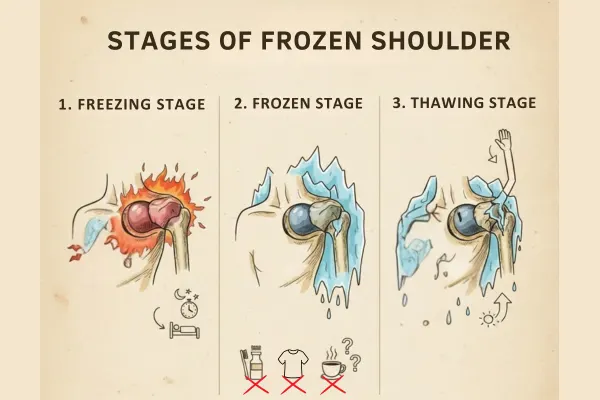
Frozen shoulder typically develops in three distinct stages:
Treatment depends on how painful and stiff the shoulder has become. Early cases may improve with medication, guided stretching, and physiotherapy, while more advanced cases may need injections or arthroscopic capsular release to restore movement.
Patients from across Mumbai and beyond trust Dr. Desai for:
Many patients ask how to cure frozen shoulder quickly. The safest answer is to confirm the diagnosis early and start the right treatment for the stage of the condition instead of forcing painful exercises at home. For persistent pain or severe stiffness, schedule a consultation to discuss the best next step.
Recovery timelines vary depending on the stage and treatment method:
If you have shoulder pain with progressive stiffness, difficulty reaching overhead, or trouble sleeping because of the shoulder, it is worth getting assessed early. Frozen shoulder can overlap with rotator cuff tears, arthritis, or other painful conditions that need a different treatment plan.
Dr. Desai evaluates each patient clinically and with imaging when needed so that treatment is focused, practical, and stage-appropriate. You can also explore rehabilitation support or book an appointment if your symptoms are not settling.
Frozen shoulder, or adhesive capsulitis, is a condition where the capsule around the shoulder joint becomes inflamed and tight, causing pain and major loss of movement.
Yes. Many patients use the term locked shoulder to describe frozen shoulder because the joint becomes so stiff that routine movements feel blocked or severely restricted.
The most common symptoms are shoulder pain, stiffness, night pain, and difficulty reaching overhead, behind the back, or away from the body.
Frozen shoulder is linked to tightening of the shoulder capsule and is more common after injury, surgery, prolonged immobilization, diabetes, and thyroid disorders.
Yes, gentle stage-appropriate exercises can help improve movement, but aggressive stretching can worsen pain. Exercises work best when they are part of a guided treatment plan.
The quickest route to improvement is early diagnosis followed by the right combination of pain relief, physiotherapy, injections, or arthroscopic capsular release when stiffness is severe and persistent.


Quick Contact Here
+91 22 23062035
022 - 23012732